

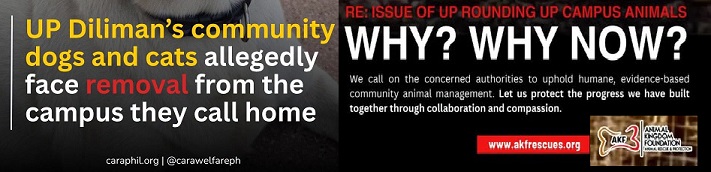
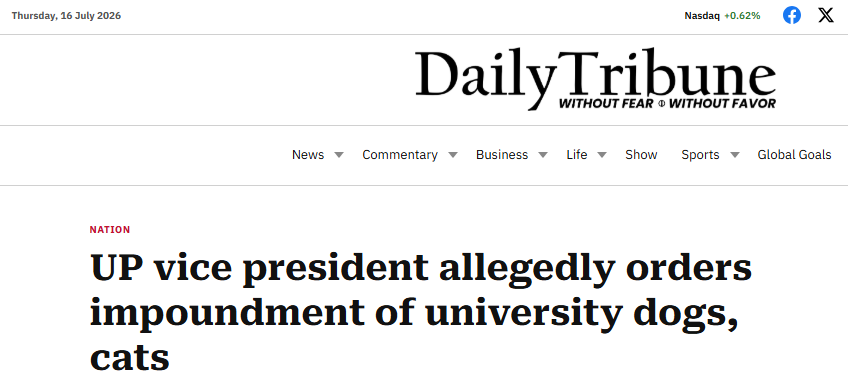
The recent controversy surrounding the alleged proposal to remove community dogs and cats from the University of the Philippines Diliman has once again brought into sharp focus an issue that extends far beyond a single incident. While differing views on campus safety and animal management are understandable, this moment presents an opportunity for the University to move beyond reactive measures and establish a clear, evidence-based, and humane policy governing the management of community animals across the campus.
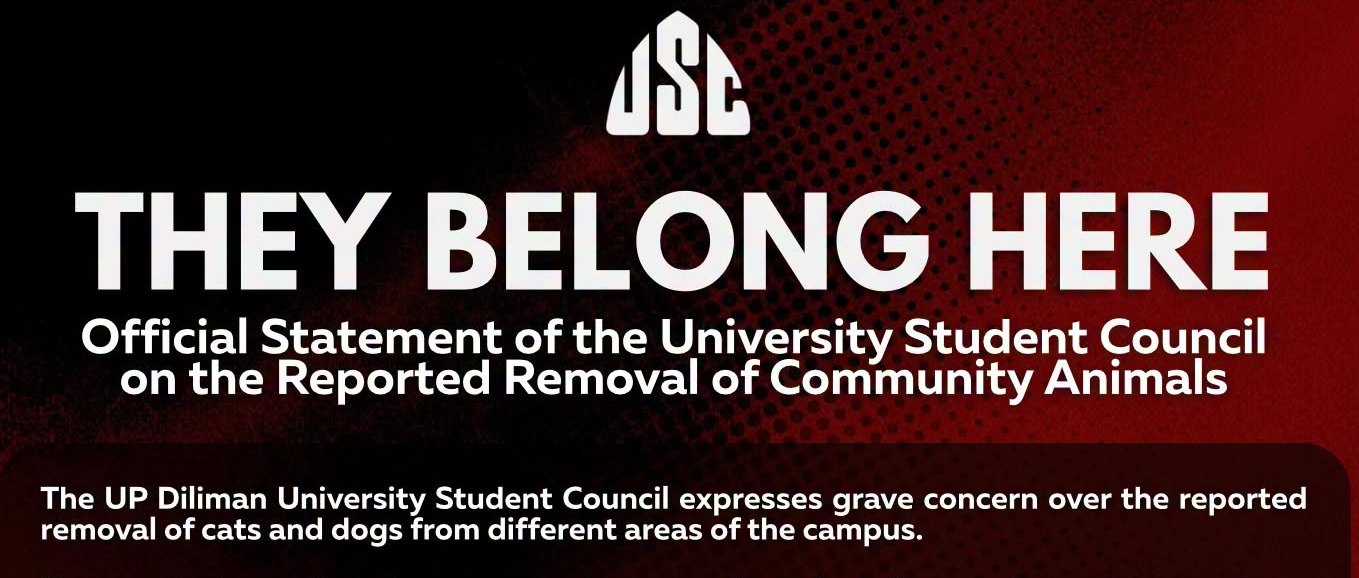
In short, UP doesn’t need to remove stray dogs; it needs a clear policy. The recent uproar about allegedly removing community dogs and cats from UP Diliman caught a lot of attention. And honestly? It’s about time we had this conversation.
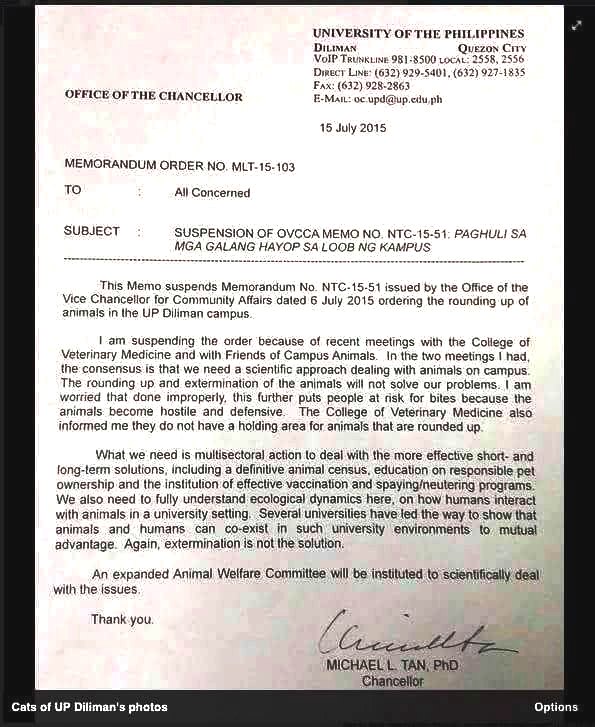
On July 6, 2015, the Office of the Vice Chancellor issued a memo ordering the “rounding up of animals in the UP Diliman campus. FOCA vehemently protested. On July 15, 2015, Chancellor Michael Tan issued a Memorandum suspending the July 6 memo of the OVCCA. In the said memo, Chancellor Tan wrote: “I am suspending the order because of recent meetings with the College of Veterinary Medicine and Friends of Campus Animals… the consensus we had is that we need a scientific approach dealing with animals on campus. The rounding up and extermination of the animals will not solve our problems…”
The Campus Animal Management Committee was instituted by Chancellor Tan under the OVCCA. The CAMC successfully organized TNVRs with a lot of help from animal welfare organizations, veterinarians, and volunteers. CAMC’s Dr. Jonathan Anticamara and Asst. Prof. Khrysta Imperial Rara started the research on Campus Animal Management as a university policy by studying campus animal policies abroad and doing preliminary surveys on cat and dog population in UPD.
In spite of the enlightened leadership of Chancellor Tan, succeeding administrations continued the impounding of dogs, as instituted by some of the OVCCAs and the research on proposed policy did not prosper.
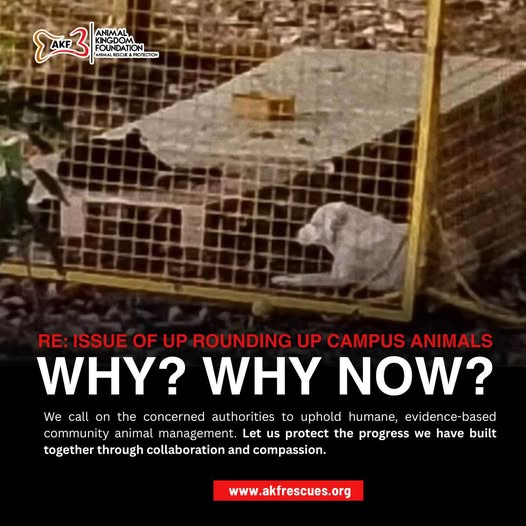
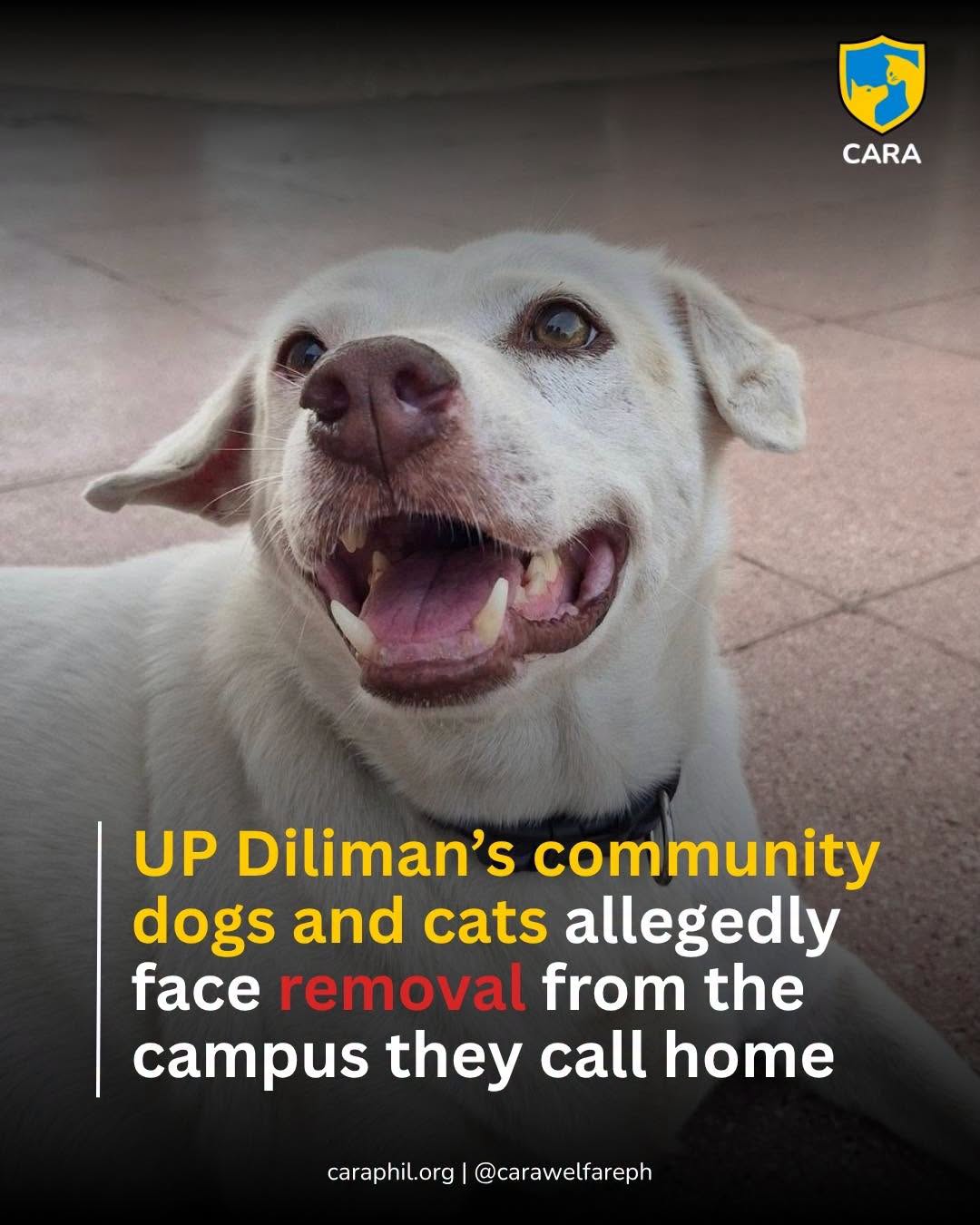
UPD AS A MODEL IN ANIMAL MANAGEMENT
For years, UP has been has been the leading light among universities in the country that actually tried to do right by stray animals. In 2015, then UP Diliman Chancellor Michael Tan partnered with animal welfare group Friends of Campus Animals UP (FOCA-UP) and other animal welfare organizations — like the Animal Kingdom Foundation, the Compassion and Responsibility for Animals (CARA), International Wildlife Coalition Trust (IWCT), dedicated animal welfare advocates and volunteers, and especially the Quezon City Veterinary Office — initiated a continuing program that eventually captured, neutered, vaccinated, microchipped, and returned to their territories more than 1,500 campus dogs and cats.
Although it was Ateneo de Manila University that first began the practice of TNVR in a campus setting, it was UP Diliman that first developed a comprehensive Animal Management protocol with its initiatives in TNVR, information campaigns (done by OVCCA, the campus-based animal welfare group FOCA and CWTS students), SAGIP Search and Rescue campus dogs and the ESA program. Other campuses looked up to UP in their attempts to solve the increasing stray population in a humane way.
Some time in 2021, faculty from St. Paul’s University contacted FOCA and studied the UP model. They found it to be humane and sustainable and they began neutering and caring for their campus cats. The student organization Cats of UP Los Banos also studied the UPD model and started working with the UPLB admin in animal management. Students of Philippine Science High School, Polytechnic University of the Philippines, UP Manila, and UP Baguio and the faculty members of UP Visayas led by its Chancellor, Dr. Clement Camposano, have consulted UPD and FOCA UP and put up their own TNVR and Animal Management in their campuses.
Even the QC LGU followed the UPD example. In 2022, Mayor Belmonte announced that they were offering TNVR to barangays. Dr. Rey del Napoles, veterinarian of our ESAs and SAR dogs, is one of her advisers. They have also put up an adoption center where they train the friendly stray dogs that they catch and prepare them for eventual adoption as well as ESA and SAR work. Their initiatives are patterned after the UPD model.
BALAI KAIBIGAN
Chancellor Tan set up a temporary center called Balai or Balay Kaibigan (House of Friends) as the venue for the spaying and neutering of 760 campus cats and dogs in June and November 2019. After the TNVR (trap-neuter-vaccinate-return) operations, the animals were returned to the exact places where they were caught. Some of the gentle and friendly cats who had no homes to return to were rehabilitated in BK and later adopted by individuals and families. The adopters had to go through a screening process. After several such TNVRs, hundreds of campus cats and dogs had been adopted or, as animal welfare enthusiasts say, found their forever homes.
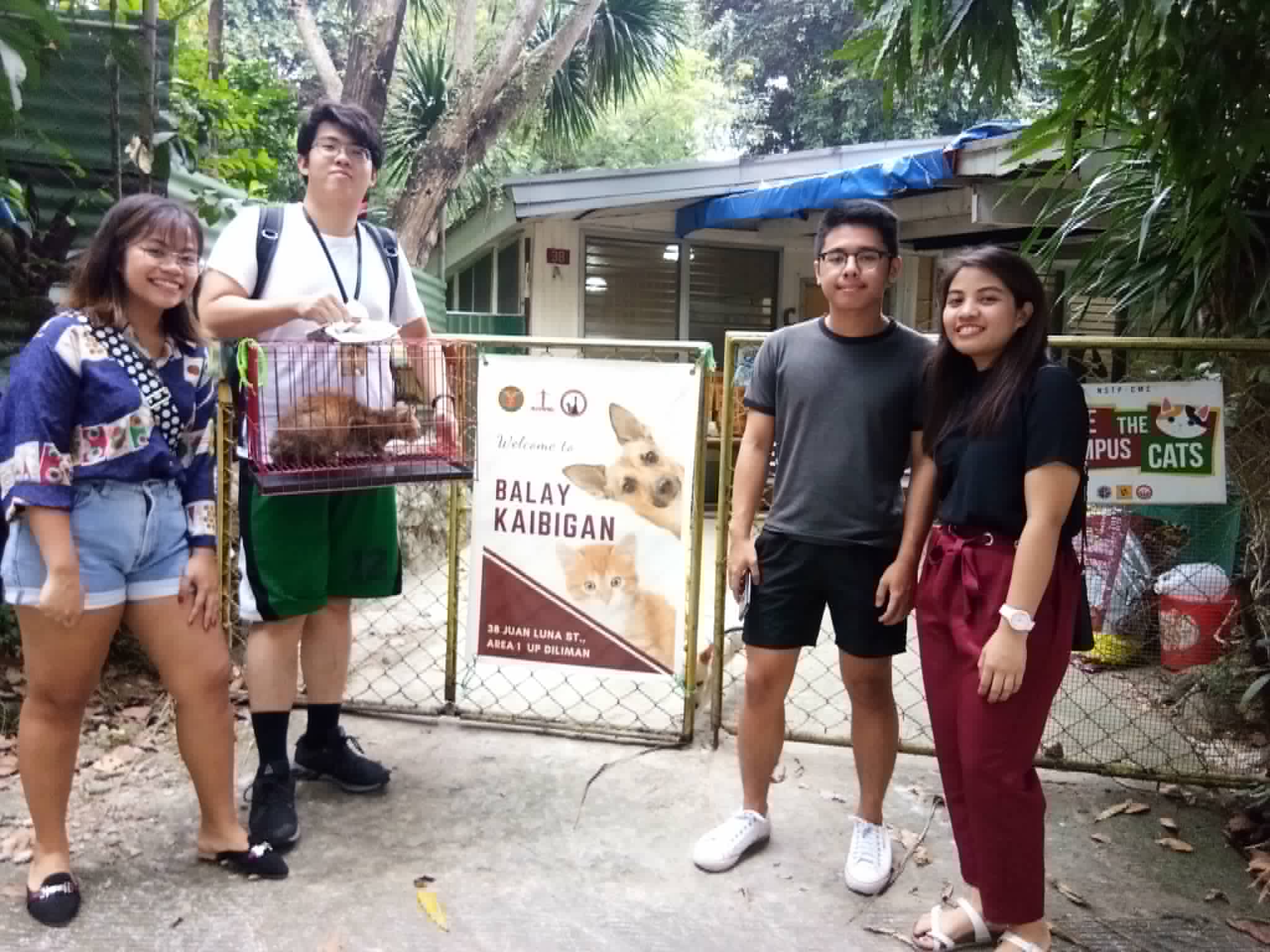
Under Chancellor Fidel Nemenzo, BK also became home to 30 stray and feral cats rescued from the College of Social Science and Philosophy (CSSP) when Palma Hall was converted into an isolation area for Persons Under Investigation (PUI) and Persons Under Monitoring (PUM) for COVID-19 in April 2020. After 9 months, 23 CSSP cats had been adopted, 4 feral cats were released back to CSSP, three died due to unknown causes.
Students were welcomed at the Balai and allowed to pet the animals and walk the dogs around the neighborhood.
UPD approved around P 4 M budget to renovate the Balai in 2020, but the then Vice Chancellor for Community Affairs let the budget expire as he did not want the Balai to continue. His replacement also wanted to close down Balai and even refused to give budget for food and medicines of the animals. FOCA UP, with the help of volunteers, spread the word that the Balai animals needed donations. Fortunately, many kind people stepped forward and donated food and medicines for the animals.
These two Vice Chancellors promoted the policy of impounding the campus dogs by the Quezon City Pound and insisted that the BK should be closed down.
Despite protests from the students and other stakeholders, the administration shut down the Balay.
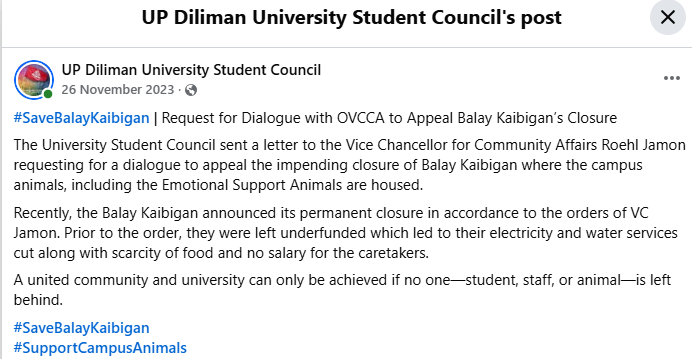
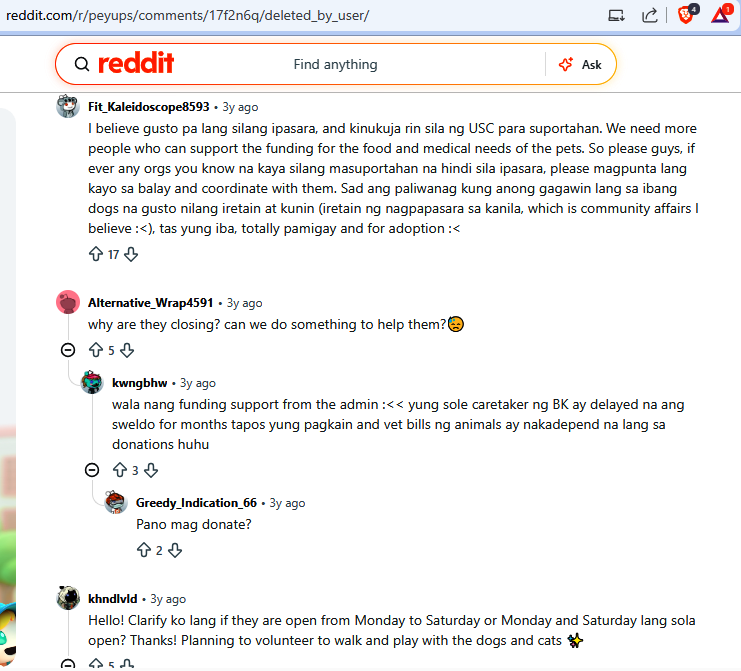
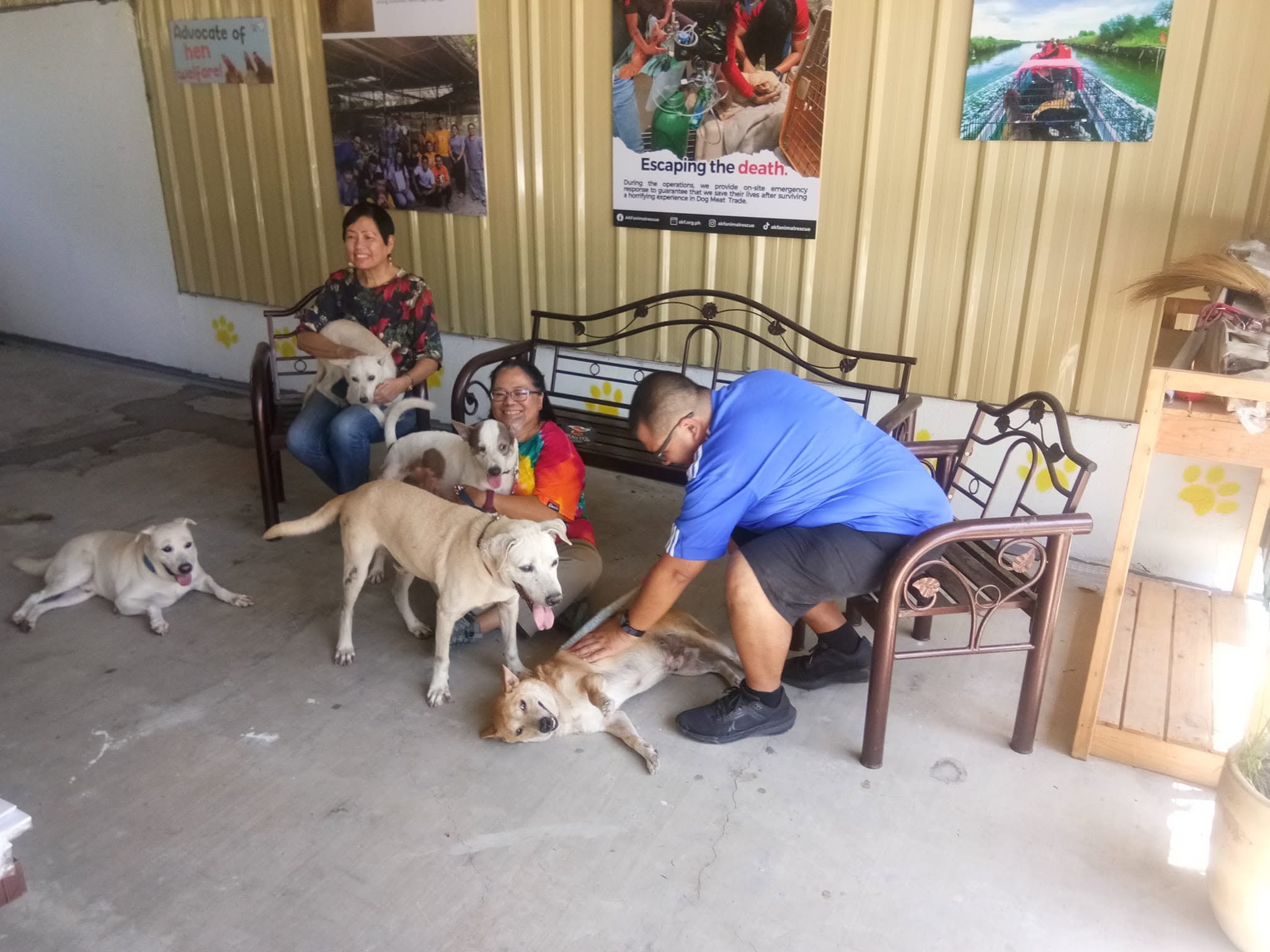
Through the valiant and frenzied efforts of FOCA-UP volunteers and friendly organizations, around 40 cats and dogs were given for adoption before the Balai was shut and abandoned. The remaining 9 cats and 4 dogs were accommodated by the Animal Kingdom Foundation in their shelter in Tarlac.
The UP Visayas team led by Chancellor Dr. Clement Camposano was so inspired by the UPD Animal Welfare Management system that they created their own system in their campus and built their version of Balay Kaibigan and named it Balay Kalagday. Ironically, while Balay Kalagday continues to serve the human and animal constituents of the UP Visayas campus, the Balay Kaibigan is no more, thanks to some UPD officials.
EMOTIONAL SUPPORT ANIMAL (ESA) PROGRAM
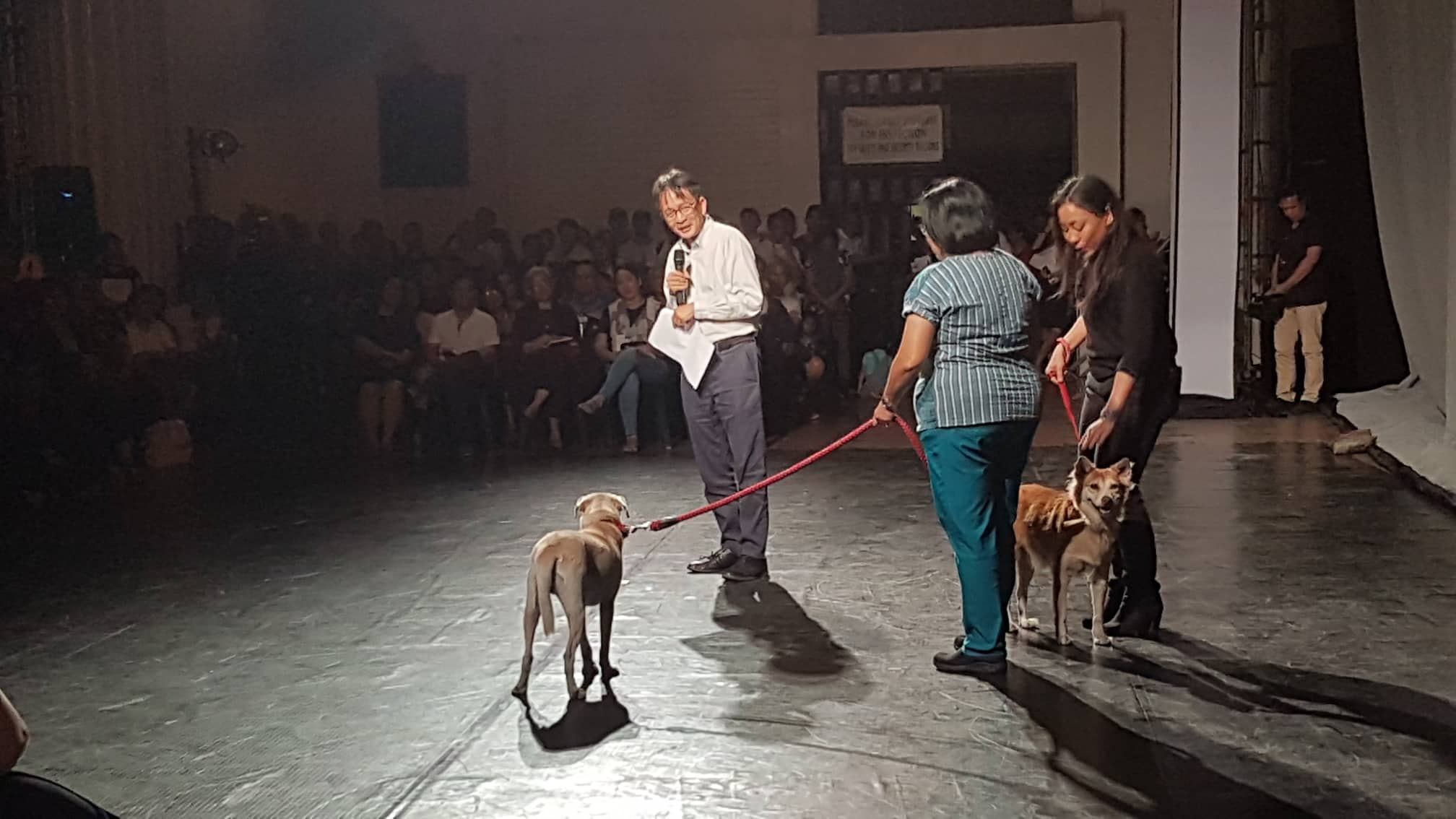
In February 2019, then Chancellor Michael Tan announced the new Emotional Support Animal (ESA) program and introduced Kotton and Tisay, two friendly dogs from Quezon Hall and College of Media and Communication, to UP officials during the 70th anniversary of the transfer of the UP campus from Ermita in Manila to Diliman in Quezon City.
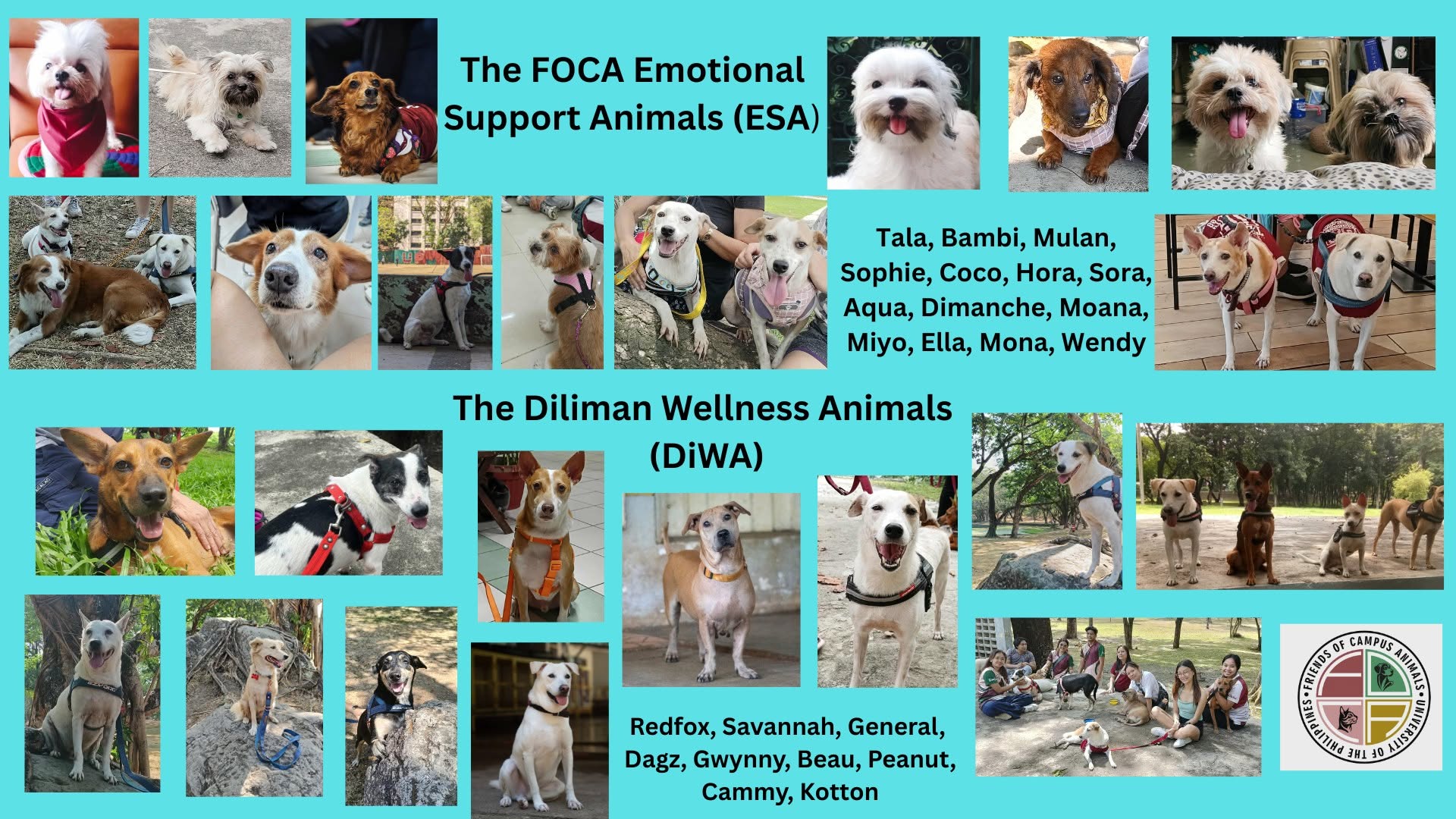
In January 2020, fifteen friendly campus dogs were trained at BK for basic obedience, agility and socialization. These dogs used to roam around the campus or live in the different colleges. They were chosen for their gentle and friendly nature and included in the UPD Emotional Support Animal Program. These dogs were trained to help students de-stress and relax during midterm and finals weeks. they were deployed at the different units and colleges, esp. to students’ study or learning centers.
When the Balai was closed down, six Emotional Support Dogs were saved from Balai by the then newly appointed Vice Chancellor of Student Affairs Jerwin Agpaoa, who used to hold the same position during Chancellor Tan’s term and was familiar with UPD’s animal welfare programs. These dogs became the core of the current Diliman Wellness Animals (DIWA) program of the Office of the Vice Chancellor for Student Affairs, which has a new chief now.
UPD SAGIP K9 UNIT
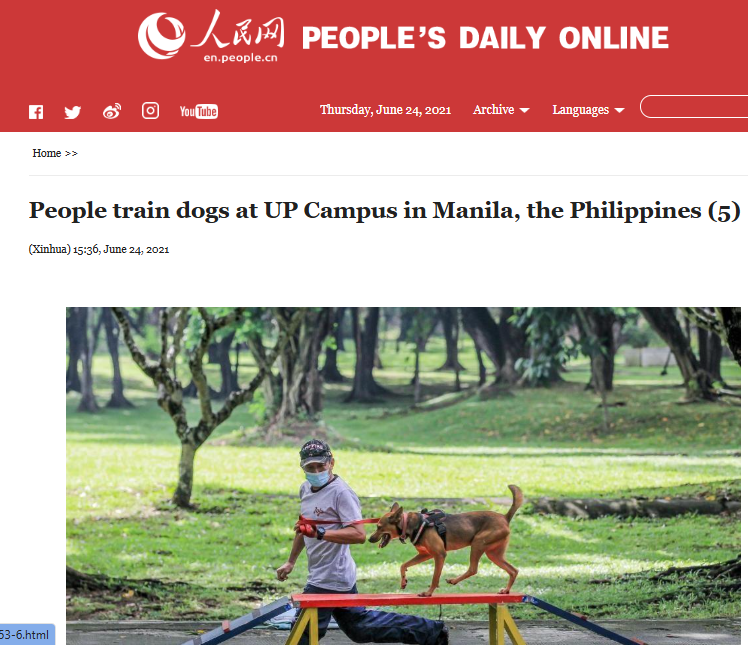
In January 2021 under Chancellor Nemenzo and Vice Chancellor for Community Affairs Dr. Aleli Bawagan, sixteen dogs began scent training to hone skills that would allow them to help the UP community in case of natural disasters and emergency situations. The dogs were a mix of former stray and roaming animals and pets of residents and staff. The handlers were an eclectic mix of volunteers from UPD faculty, staff, students and security personnel.

The 16 dog and handler teams trained several times a week under rain or shine for about two years under the able guidance of a dog behaviorist and trainer. The teams trained to develop agility, trust, team work and hone scent and tracking skills.
PACK WALKS
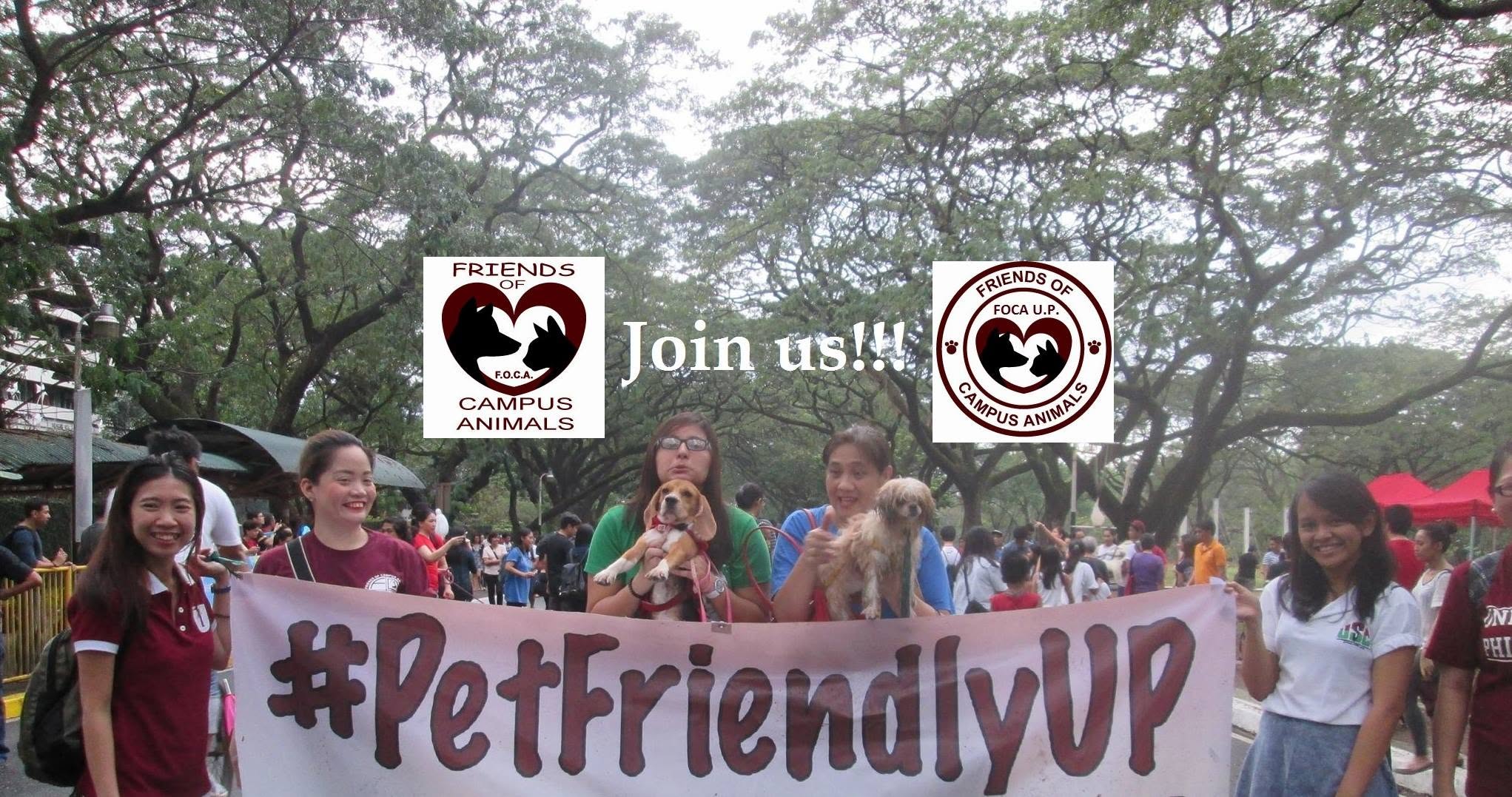
FOCA UP initiated a dog pack walk in 2015. At the year’s Lantern Parade, the FOCA UP Dog Pack Walk joined the parade at the head of the procession. This was quite a milestone because during that time, dogs were not allowed at the UP Oval.
From then on, FOCA UP and their dog pack joined the Lantern parade every year.
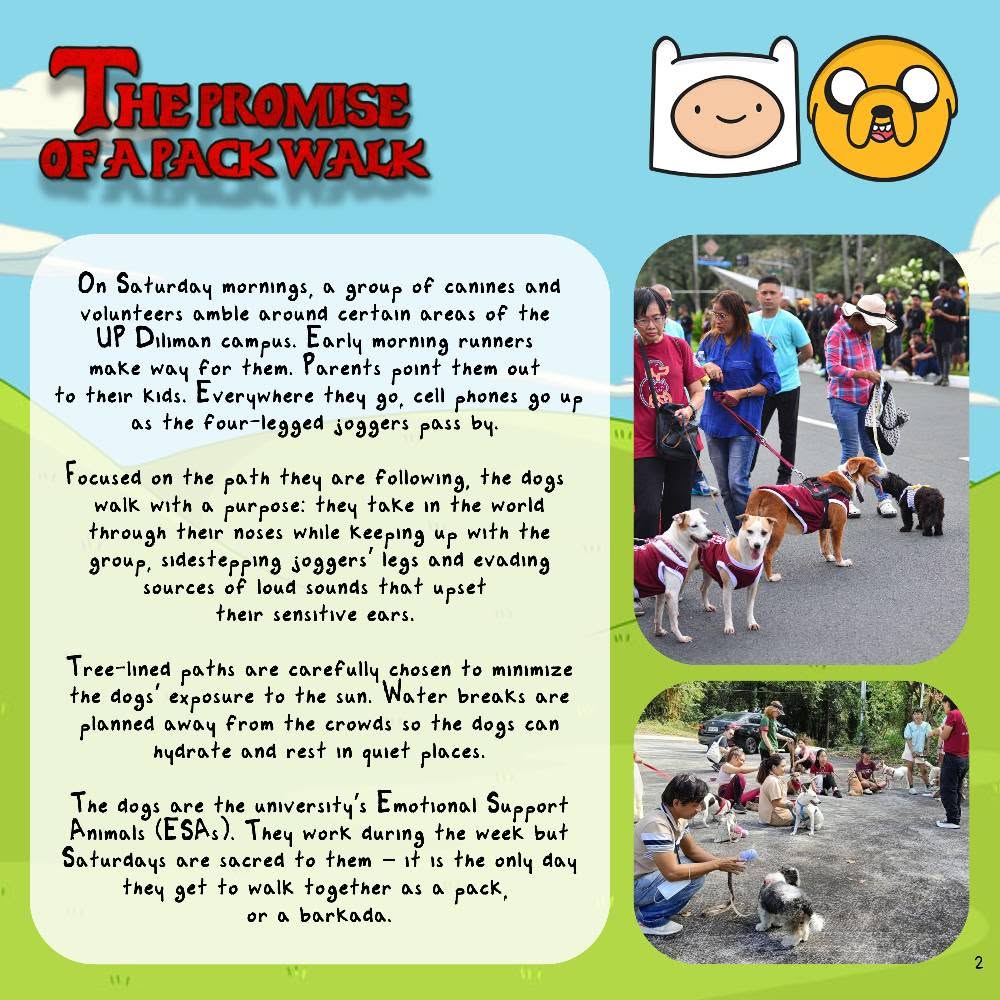
For some time now, FOCA UP, with the coordination of OVCSA, has been conducting dog pack walks every Saturday with DIWA and FOCA’s ESA dogs. Students, and members of the community and the dog-loving public are welcome to join the pack walks and handle the dogs themselves. After the pack walks, there are games and a bit of lectures on dog handling.
CNVR
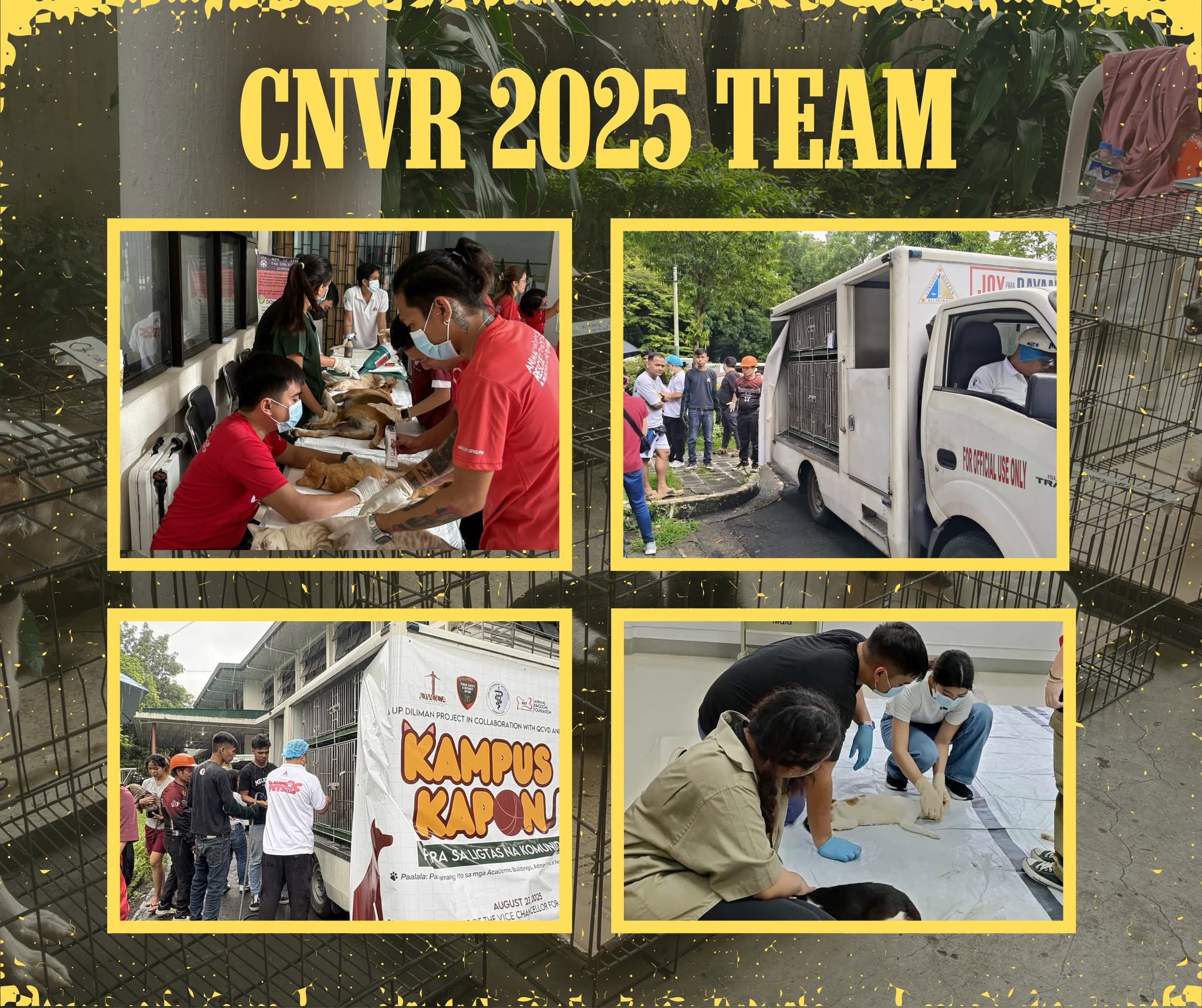
The Capture-Neuter-Vaccinate-Return (CNVR) or T(ransfer)NVR program has demonstrated that humane animal population management is both practical and effective. It addresses the root causes of stray animal overpopulation while promoting public health and reducing conflicts between humans and animals.
Yet the recent controversy reveals that despite years of successful implementation, the University still lacks a comprehensive institutional policy that clearly defines how community animals should be managed and protected. Such a policy is urgently needed to ensure that decisions affecting campus animals are guided by science, compassion, consistency, and the law rather than by isolated complaints or short-term responses.
To repeat: despite all that progress, UP still does NOT have a formal, university-wide policy on how to manage these animals. So every time someone complains—or every time an incident happens—the response feels reactive. Ad hoc. It’s like they (UP admin people) are making it up as they go along.
At the heart of such a policy should be two fundamental principles.
CNVR as the main approach
First, CNVR must remain the University’s primary strategy for campus stray animal management. No more debating whether to trap and remove. No more impulsive decisions based on a few angry voices. CNVR works because it prevents the vacuum effect—when you take animals out, new unneutered ones just move in, and you’re back to square one. UP has already put serious money and effort into this program. Walking away from it now would be a waste. A crying shame.
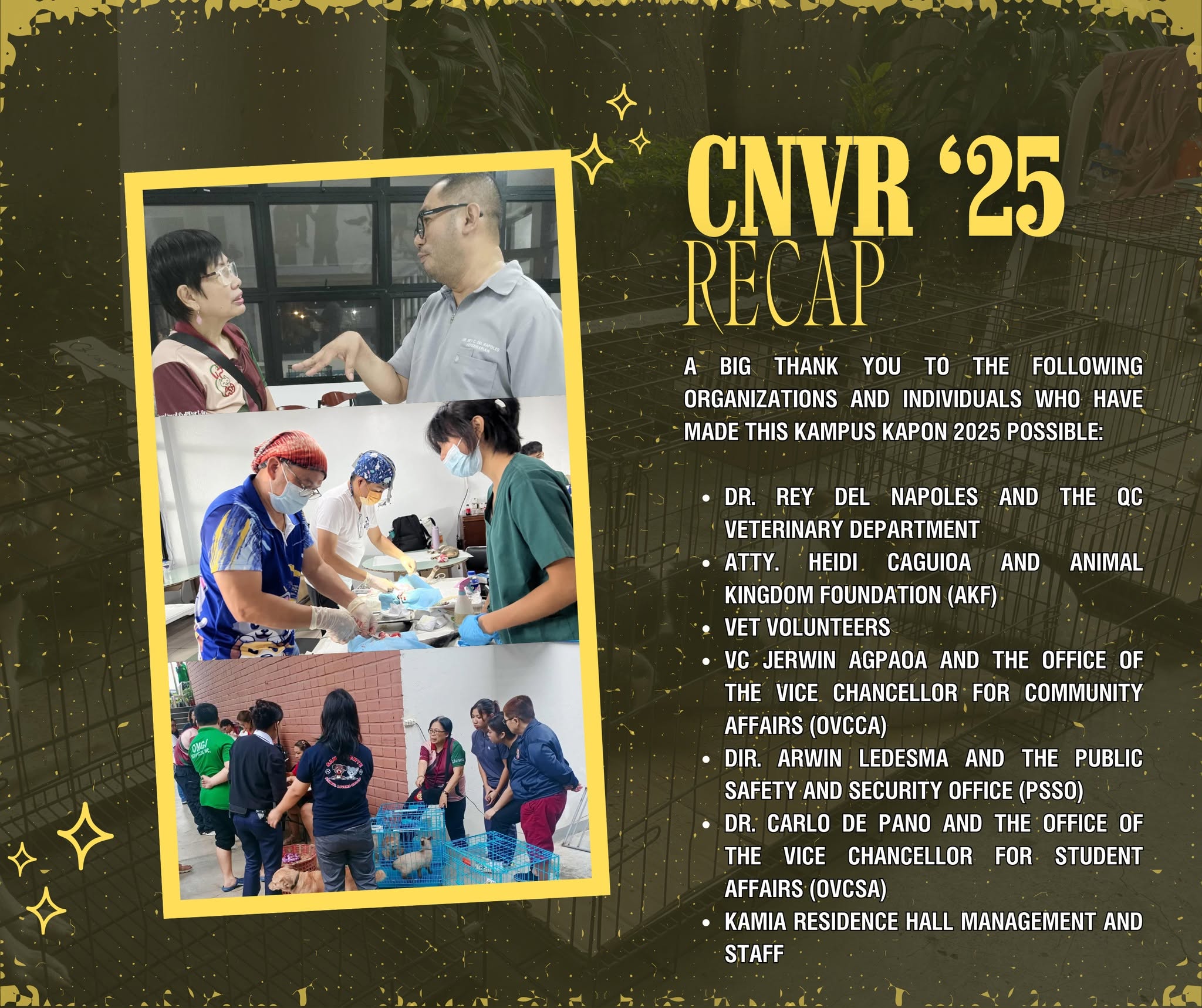
Abandoning this approach would not only disregard years of progress but would also undermine one of the University’s own success stories in humane community animal management.
NO TO IMPOUNDING
Second, the policy should say outright: impounding is not the default. We don’t round up healthy, vaccinated animals just because they exist in public spaces. We monitor, we manage, we coexist. That’s the goal—not a sterilized campus, but a responsibly managed one.
It cannot be over-emphasized that impounding should never become the default response to the presence of community animals on campus. Unless animals are suffering from severe illness, require emergency veterinary intervention, or pose a demonstrable and immediate threat to public safety, healthy vaccinated community animals should remain within their established territories under proper monitoring.
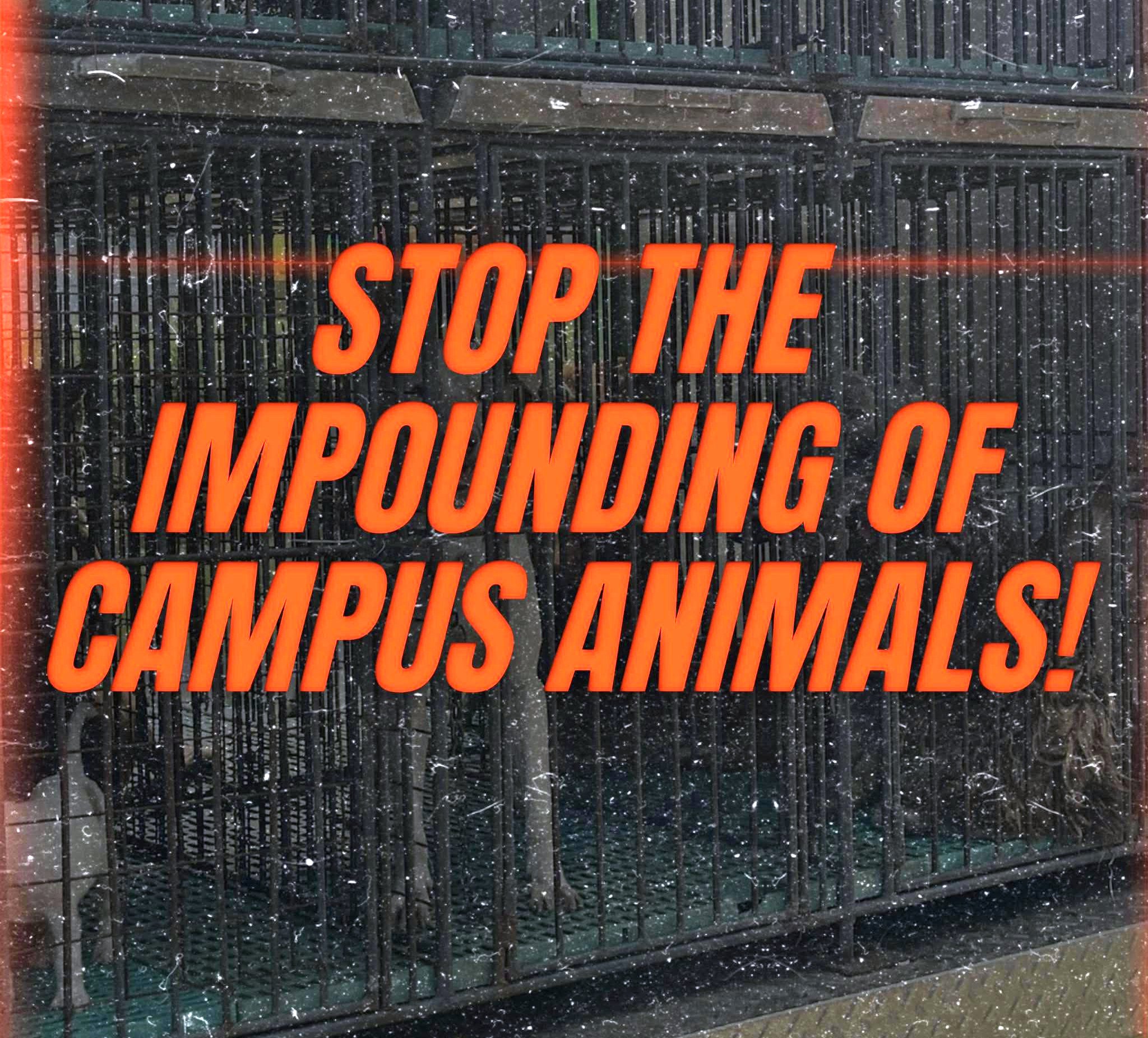
The objective of animal management is not simply to remove animals from public view but to manage them responsibly while balancing public safety, environmental concerns, and animal welfare.
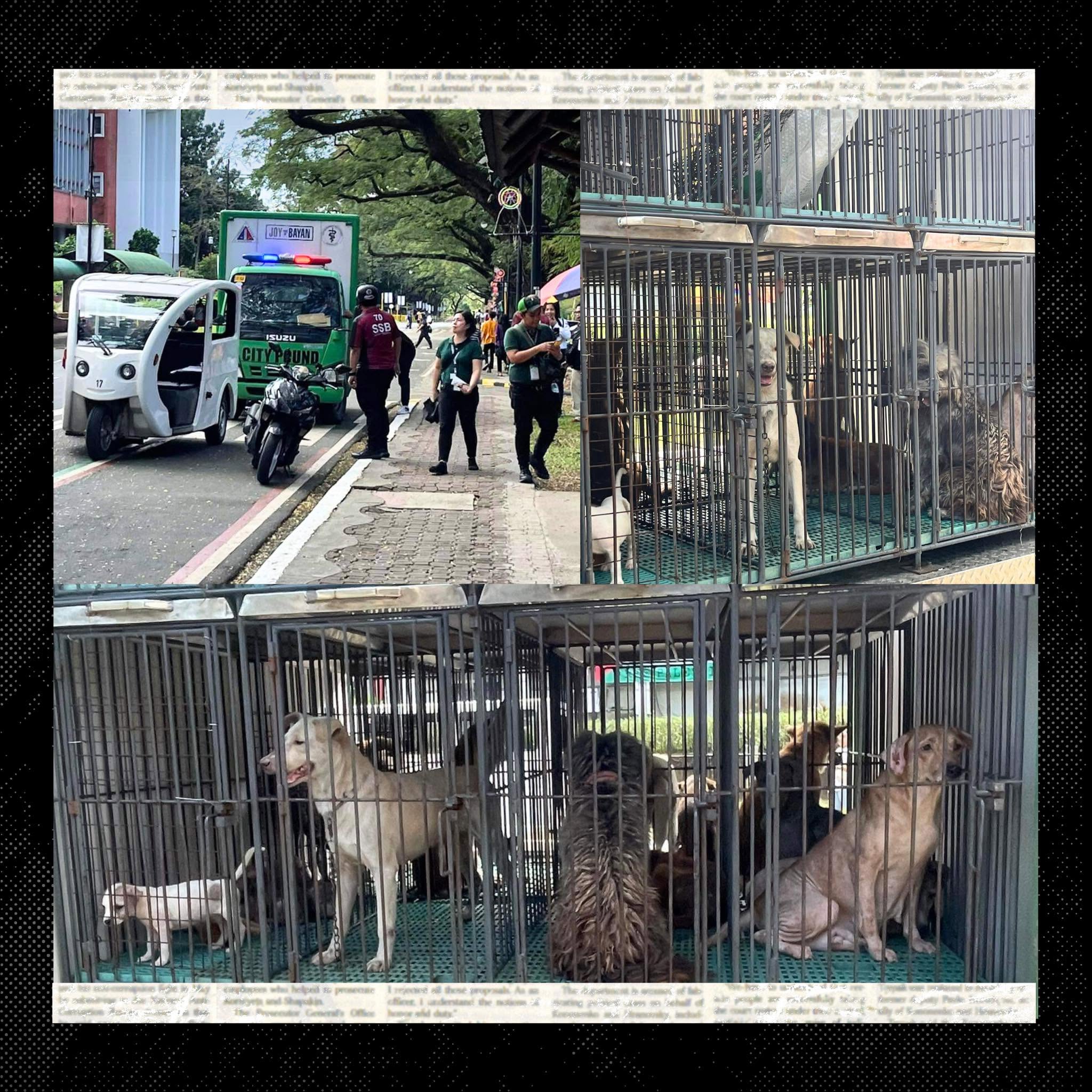
To reiterate, a humane campus is not one that eliminates animals; it is one that manages coexistence intelligently.
Of course, a policy alone isn’t enough. There is also a need for regular CNVR operations, health monitoring, clear feeding guidelines, and proper response procedures for bite incidents or complaints. There must be a system for reporting abandoned pets. UPD needs to keep working with animal welfare groups and volunteers who actually know what they’re doing.
EDUCATION
Perhaps most importantly, the policy should emphasize education.
Many of the challenges surrounding community animals stem not from the animals themselves but from human behavior. Animal abandonment, irresponsible pet ownership, improper feeding practices, and widespread misconceptions about stray animals all contribute to the problem.
As the country’s “national university”, UP is uniquely positioned to become a leader in promoting humane education. Information campaigns on responsible pet ownership, the Animal Welfare Act, rabies prevention, community animal management, and respectful human-animal coexistence should become regular features of campus life. Students, faculty, staff, residents, security personnel, and visitors should all understand both their responsibilities toward animals and the protections afforded to animals under Philippine law.
FOCA UP with either the OVCCA and/or OVCSA have been disseminating information on the above topics all these years. FOCA teams have given talks on Proper Animal Management, Dog and Cat Behavior, Advantages of CNVR, etc. to staff and students in student dorms and colleges or units, and even to schools outside of UP.
Republic Act No. 8485, as amended by Republic Act No. 10631, recognizes that animals deserve protection from cruelty and neglect. The University should ensure that all campus policies are fully consistent with both the letter and spirit of the Animal Welfare Act.
ETHICAL LEADERSHIP
Universities are supposed to model ethical leadership. UP champions human rights, environmental protection, scientific inquiry, and social responsibility. Those values shouldn’t stop at humans. The animals on campus are part of this community too. They’ve been here. They’ll keep being here. UP just needs to manage that reality with compassion and consistency.
The current controversy should therefore not divide the University community. Instead, it should become the catalyst for a lasting institutional reform.
The University now has an opportunity to adopt a comprehensive Campus Stray Animal Management Policy anchored on two enduring pillars: CNVR as the primary management strategy and a firm commitment against impounding as routine policy. Supported by education, responsible stewardship, community participation, and strict adherence to the Animal Welfare Act, such a policy would protect both people and animals while reflecting the University’s commitment to compassion, evidence-based governance, and social responsibility.
UP has a chance to set a national example: show that a university can be both safe and humane; and to prove that coexistence isn’t naive—it’s intelligent.
The time to institutionalize that vision is now.
============================
============================
In May 2026, UPD gave FoCA-UP the Gawad Tsanselor Award for Outstanding Service to the Community. See FOCA’s Gawad Tsanselor Award
See ESA KOTTON: FROM UPD STREET DOG TO STAGE DOG WITH A CAUSE


