

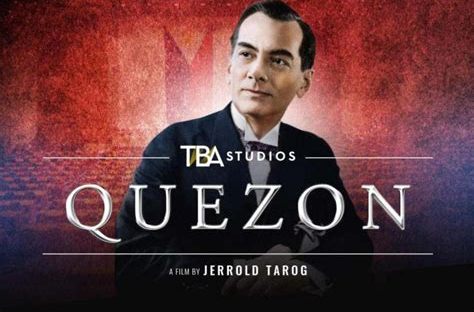
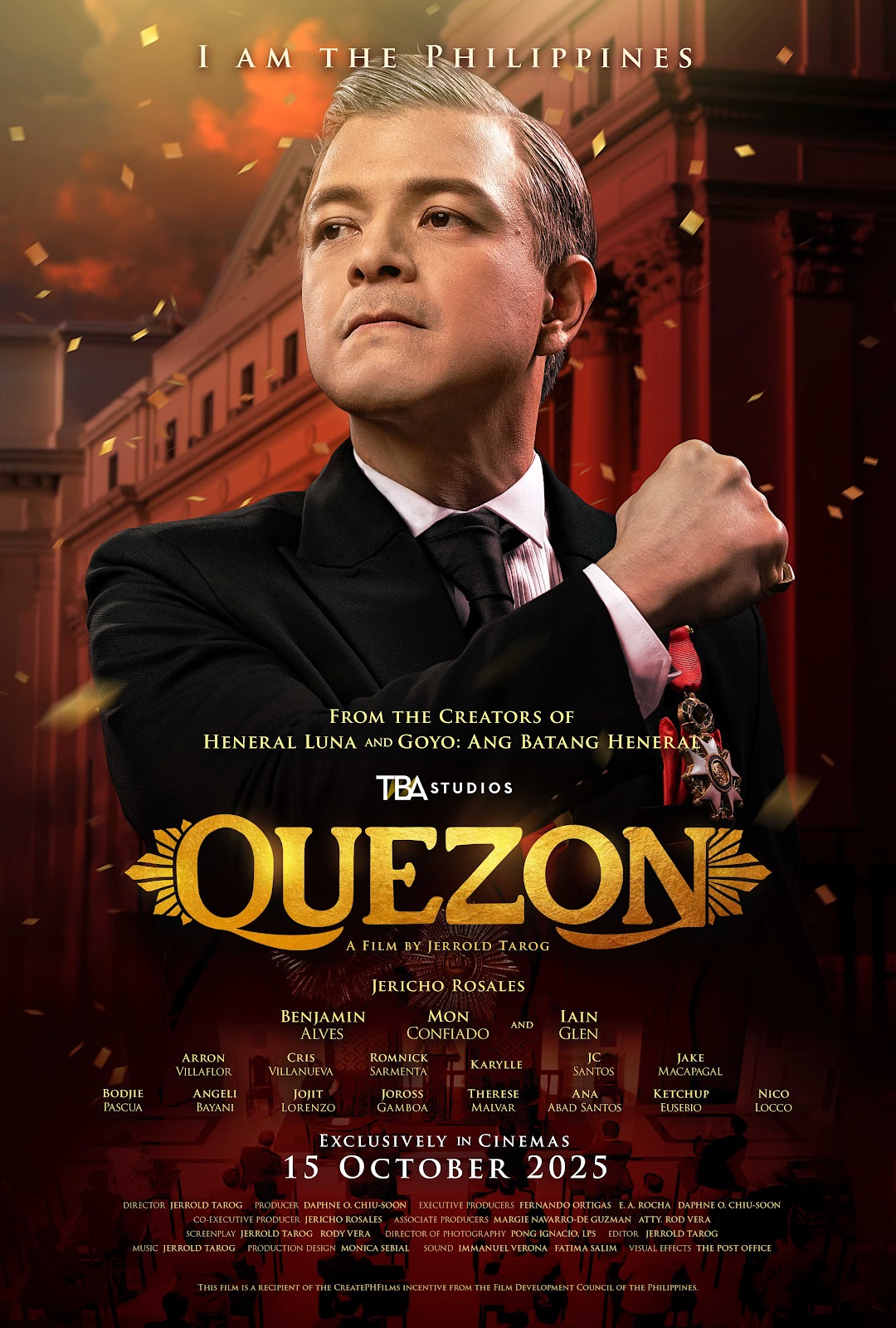
Finally saw the somewhat controversial film Quezon (2025), the 3rd movie in the Bayani (Hero) series of E.A. Rocha and Fernando Ortigas, Executive Producers and Jerrold Tarog, Director of the films. The controversy arose when one of Quezon’s grandsons Ricky Avanceña questioned the director during a Q&A forum on the film. He asked if the film was a satire, and the director said yes. He then said that for the filmmakers to have their laughs and profits, they made a film that destroyed the image of his grandfather, he who gave so much for his country. Or something of the sort. He insulted the filmmakers and then dropped the mic and left.
Was it a satire? According to the Cambridge Dictionary, satire means “a humorous way of criticizing people or ideas to show that they have faults or are wrong, or a piece of writing or a play that uses this style: Ex: The play is a satire on corporate culture. “
Merriam-Webster defines Satire as: “ wit, irony, or sarcasm used to expose and discredit vice or folly (as of a person, government, or society)
broadly : humor that criticizes weakness or wrongdoing”
SATIRE AND BITTERNESS
Does the film have wit and humor? Yes, some. According to Merriam-Webster, “humor implies an ability to perceive the ludicrous, the comical, and the absurd in human life and to express these usually without bitterness.” But the movie is quite full of bitterness. Aguinaldo was bitter about Quezon’s actions, especially when Quezon took back his farm. The fictional character Joven Hernando was very bitter about Quezon’s closing down his newspaper.
The alleged first wife of Quezon seemed to be bitter, or had all the reasons to be so. She was shown as a very pregnant wife/partner of Quezon who left her in the boondocks to surrender to the Americans.
And Quezon himself was shown very bitter at the end of the movie, blaming Fate for giving him a weak body and begrudged Osmeña for having a stronger body when he, Quezon, deserved to have the stronger body; for, as he screamed, “I am the Philippines.” This last scene alone turned Quezon into a raving egotistical maniac, full of hatred and bitterness. Total debunking of the hero portrayed in textbooks and taught to Filipino students through the years .
As an example of a sentence using satire, Cambridge dictionary gave this: “As the old justification runs, satire offends less when directed at a type instead of an individual.” Unfortunately, in this movie, while the satire is sometimes directed at some types of politicians, it is mostly directed at the main character, Quezon, who was an historical person. No other politician character in the movie, not even his friend and rival Osmeña, was shown as scheming and manipulative and corrupt as he was.
FICTIONAL CHARACTER
Putting a fictional character inside a biopic or true story is not a simple thing. The character’s actions must be believable as if he were a real person or historical character. The fictional character Joven Hernando has so many holes in it.
In the very early scenes, he was seen arguing with President-elect Quezon as if they were of equal stature. But the audience had never heard or read about an historical figure named Joven Hernando. Who was he?! In the middle of the grand celebration of the election of Quezon to the Presidency, this guy tells the President, “I need to talk to you, now.” I wondered who he was. Who could do such a thing, except maybe, the VP-elect, Sergio Osmeña?
A mere journalist chastising Quezon? In real life, Quezon would probably be spewing Coños, Puñetas, and maybe even Hijo de Puta left and right! Perhaps it would have been better if the character who would play as the people’s conscience be a behind-the-scene millionaire benefactor or supporter. He would then be able to chastise or have violent discussion with Quezon, and still be believable.
Who owned Hernando’s newspaper, anyway? It was not Quezon’s because the paper ALERTA, was supposed to be neutral in the elections. In the same vein, it couldn’t be owned by Quezon’s friends. Those who know a bit of Philippine media history are aware that Quezon knew very well the power of newspapers. That was why he persuaded his millionaire friends to put up a chain of newspapers to compete with American-owned papers. That was one important way of fighting for Independence. Surely, Quezon and friends did not hesitate to use the power of the media in campaigning for the Quezon-Osmeña ticket. So why was he blaming Quezon for the sudden sale of the paper? Didn’t he have any say on the paper? He appeared to be a big wig, being a friend of Quezon for a long time. He even owns a theater! What was he there – Editor, Columnist or just Reporter?
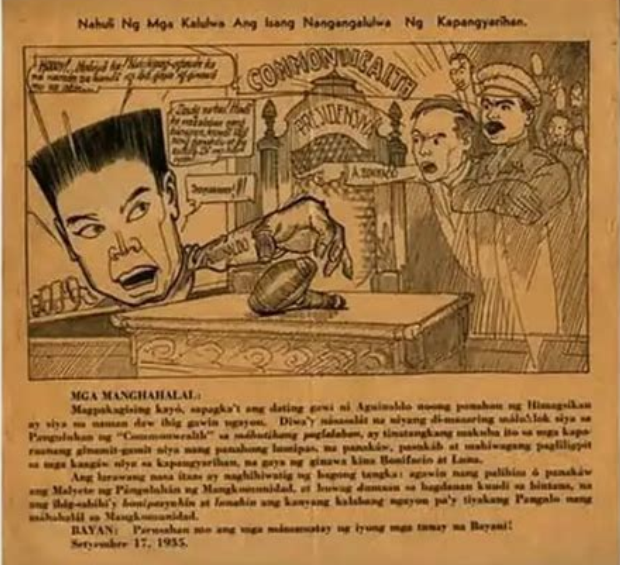
And even if he had been friends with Quezon since Quezon was a mere practicing lawyer, and knew all the shenanigans of Quezon, he still supported Quezon’s presidential campaign. And he even allowed his daughter to do propaganda films for Quezon. And yet, after all those years, he just witnessed one event in Aguinaldo’s campaign where Quezon’s aide organized a macabre protest against Aguinaldo, accusing Aguinaldo of killing Luna and Bonifacio, Hernando immediately had a change of heart, attacking Quezon in his newspaper. It is not just a case of too-late-the-hero, it is a case of being unbelievable.
Besides, in reality, Quezon, Osmeña and their US supporters bombarded the populace with their accusation of Aguinaldo as the killer of Bonifacio and Luna.
CINEMATIC STYLE
The Silent Film clips which provided the background story of Quezon was a very nice idea. Although silent films were no longer produced in 1935 in Hollywood, it is still a good idea because the topic concerned began at a much earlier date, from around the time Quezon surrendered to the Americans in early 1900s.
The episodic scenes with staccato musical scoring provided comical relief in this supposed satirical film. The problem with this comedy sequences juxtaposed with dramatic sequences, the actors did not know how to adapt. Thus, most seemed over-acting in non-comedy sequences.
Jericho Rosales tried hard to act like Quezon, the flamboyant but ambitious leader of the fledgling aspiring nation. Most of the time, he succeeded. Mon Confiado as Aguinaldo seemed to be very serious in his portrayal of El Presidente, which is as it should be. No comical scenes for him. Hollywood Scottish actor Iain Glen showed everyone what professional acting is all about. His acting was perfect.
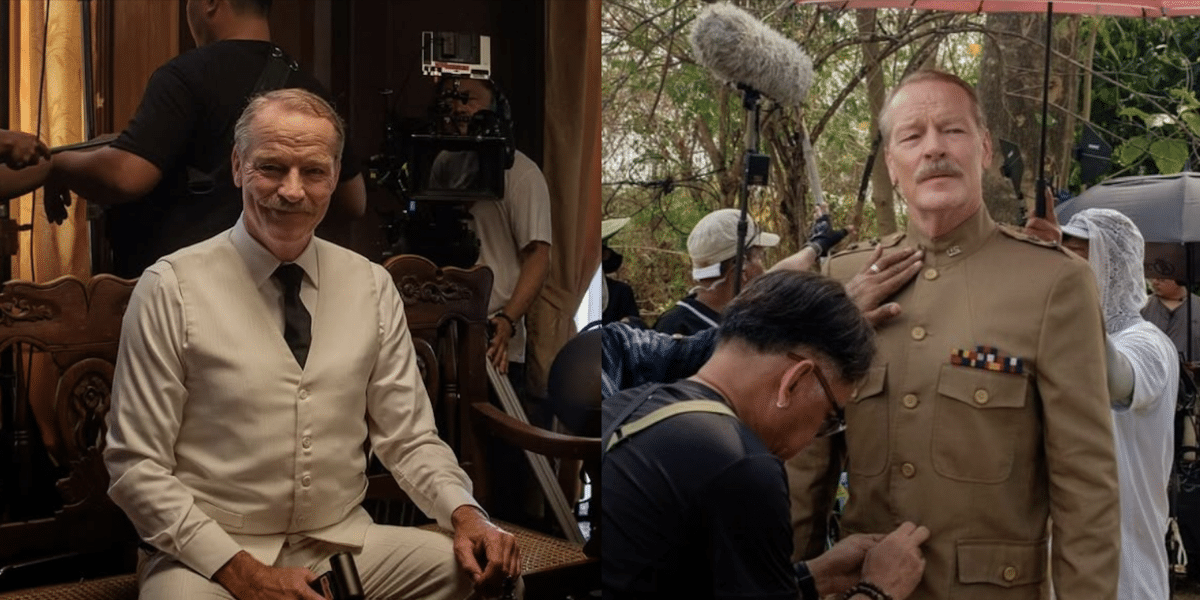
The sequence where Quezon gave a “back-door” visit to Gov.-Gen. Wood, bringing with him a bottle of whiskey, and discussing about affairs of the Islands, culminating with both of them inebriated and toasting to life (or death) was a high point of the movie. It gives the impression that this movie should not be taken too seriously, but with some sense of humor.
While this sequence was my favorite in the movie, such a scene could never have happened in real life. Leonard Wood, the architect of the Bud Dajo massacre, and Quezon did not like each other at all. Wood and Aguinaldo had more things in common, being leaders of armies. As depicted in the film, Aguinaldo endorsed Wood’s policies, contrary to Quezon’s plea that he attack Wood publicly.
SOME INACCURACIES
There are inaccuracies here and there, aside from the very fictional characters and scenes.
In the Ray Conley affair, it was not just a mayor (Manila Mayor?) who wanted Conley removed. It was the Interior Secretary Jose Laurel who endorsed his removal. But Wood ordered Laurel to reinstate him instead. Laurel resigned. The Filipino members of the Cabinet and Council of State led by Quezon followed Laurel’s example.
As to the farm of Aguinaldo, Quezon did not give it to him. Who was he to give a huge tract of land to anyone? And then to take it back when he felt like it? He would rather give it to himself.
Aguinaldo had large tracts of land. The farm in question was the Paliparan estate in Dasmarinas, Cavite. According to some sources, Aguinaldo occupied it illegally in 1911, and more than 20 years later, was asked to pay P200,000.00 to claim it legally. Other sources say that he bought it on installment and had arrears totaling that much. Aguinaldo blamed it on Quezon and political persecution.
THE GREAT AMERICANS
Like in the two previous films, the Caucasians – Spaniards and Americans – were portrayed as mature, right-thinking people. As I wrote in my critique of Goyo (2018), the filmmakers were
“intent on showing the Filipinos (formerly called Indios) that their heroes were no heroes at all. They were like squabbling children, and no match to the Caucasians – the Spaniards and the Americans. In both films Heneral Luna (2015) and Goyo (2018), the Filipinos’ complete conquest of the Spaniards and some victories over the Americans were not shown. And the atrocities -including massacres and tortures -committed by the Americans were completely ignored.”
In Quezon, the Americans were depicted as the puppet masters. They handpicked the politicians whom they could support like Quezon and Roxas. They rigged the court to make Quezon win a famous case and make a name for himself; and they helped make Quezon win as Assemblyman of Tayabas, in exchange for Quezon’s promise to give the Legislature to the Americans “body and soul.”
I remember that the movie showed Quezon running and winning as Governor of Tayabas, not as Assemblyman representing Tayabas. But he told the two Americans that he would deliver the “Legislature” body and soul. But as governor, he would have had nothing to do with the Philippine Assembly or the Legislature. I don’t know if somehow I just missed it or it was another inaccuracy.
Even Leonard Wood, whose mailed fist policy as Governor-General of the Moro Province caused the massacre of Moros, was depicted as the sane, mature, diplomatic, honest and firm leader in contrast to the corrupt and flamboyant Quezon, the weak and nondescript Osmeña and Roxas, the submissive cronies of Quezon, and the naïve Aguinaldo.
FILIPINO – BASHING
Like in the two previous films – Heneral Luna, and Goyo – the Filipinos were shown as stupid, devious, corrupt people, while the Americans were level-headed intelligent people. Like the previous films in the Bayani series, the mestizo producers and their director focused on the infighting among and between Filipino leaders. Poor Filipinos. They already have very few heroes. And now, the mestizo duo and their director are making movies to make the Filipinos ashamed of their heroes.
The Filipino masses were portrayed as having no idea what Independence meant. One of them said that he heard that it tasted good (like a fruit, perhaps.) The politicians led by Quezon were manipulative, scheming and just thinking of and for themselves. The businessmen like Enteng Madrigal just gave money to the politicians like Quezon. The millionaire Madrigal was even referred to by Quezon as “uto-uto” (mindlessly following orders). The journalists were just cynical and merely “doing their job”.
Even in the climactic scene where Aguinaldo was egged on to expose Quezon as a bigamist by calling Quezon’s alleged first wife Ana Ricardo to the stage, Aguinaldo, instead of just refusing to call Ana to the stage, had to literally wipe the sweat off his brow. With that gesture, instead of appearing as a man of principles, refusing to go down the level of mudslinging, he appeared to simply “lost his nerve” as described in Wikipedia’s synopsis of the film.
Aside from that momentous scene and the macabre protest against Aguinaldo, his character was not much maligned or ridiculed. But the Quezon character asserted that the country’s first president was Andres Bonifacio, calling to mind the movie Bonifacio, ang Unang Pangulo (2014), a paean to Bonifacio and at the end, demonized Aguinaldo and his men. That 2014 movie was also produced by Rocha and Ortigas; and could be considered the first of the Bayani series.
The Bonifacio movie did not focus on the squabbling of the indios, but its climax was the Tejeros convention, which showcased the disunity of the indios, with the ilustrados removing Bonifacio and putting their man Aguinaldo as head of the Revolution. The Tejeros convention was the mother of all inter-Pinoy squabblings.
POST SCRIPT:
VINZONS AND THE FILIPINO YOUTH
I was hoping that the film would include something about Wenceslao Vinzons. Some years ago, I came upon a newspaper article titled: ‘Wenceslao Q. Vinzons: The Hero the Nation Forgot’ He described Vinzons as “the biggest political thorn on the side of President Manuel L. Quezon during the pre-war years.” He wrote that Vinzons actively campaigned for Emilio Aguinaldo against Manuel L. Quezon in the 1935 presidential elections.
What surprised me was the fact that practically the crème de la crème of the Filipino youth at that time were against Quezon and Osmena. The newspaper article stated: “He (Vinzons) founded the Young Philippines Party, which counted as members Arturo Tolentino, Lorenzo Sumulong, Diosdado Macapagal, Ferdinand Marcos, Domocao Alonto, Jose Laurel Jr., Macapanton Abbas and many others who all became prominent figures in Philippine politics.” (Abbas was my father.)
The YPP was formally launched in a hotel in Manila with big-time politicians like Manuel Roxas and Jose P. Laurel in attendance. The New York Times in its Jan. 8, 1934 edition published the launching. Since the US was the protector of the Quezon-Osmeña duo, the NY Times twisted the story and claimed that it was a “Fascist Party…Complete with a Salute”. It claimed that Roxas, who was then complaining that Quezon and Osmeña were hogging the limelight, headed the party. But at least, it reported that the aim was “clean government”, that the party would “Bow to No Man”, and that it was against Quezon’s plan. Even at that time, US media were already practicing Fake News.
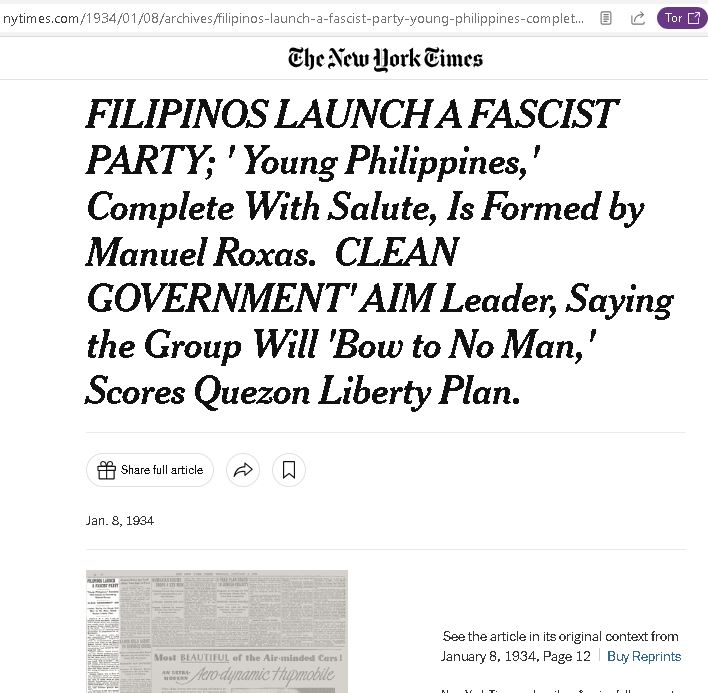
It doubly amazed me that Vinzons and his contemporary young lawyers were all against Quezon and Osmeña!
This is against the official narrative of modern Philippine history where Quezon and Osmeña were the revered fathers of the Commonwealth and the Republic and loved by most, if not all Filipinos. And Vinzons and the other youth leaders campaigned for Aguinaldo! And in 1941, the Young Philippines Party went on to contest the Nacionalista Party of Quezon and Osmeña.
WHAT’S NEXT?
It looks like the next film of the series would be on Ramon Magsaysay. I hope they will not debunk him, too. My father was a Magsaysay guy.

 Postprandial Musings, 2.0