



Just saw Magellan (2025). I have never been a fan of Lav Diaz. Once, I had to sit in a theater to watch a 7-hour Diaz film. It was required watching for one of my film studies graduate courses. It was one of the worst films I had seen.
Magellan (2025) was a re-imagining of the Magellan-Lapu Lapu affair, with the convoluted imaginings of Lav Diaz. The 16th century Cebuanos were turned into a tattooed nudist colony with perverted, pagan rituals using animal blood. They even “buried” their dead in the sea, covering the bodies in a shroud and letting them float out to the open sea and perhaps sink down the deep sea later.
It is not even clear if the women were having a ritual to heal the young boys or were sacrificing the young boys for whatever cause. Whether healing or “burying” the boys, why were the men not involved? And only a few women, presumably the closest kin. One can only surmise that there must have been an epidemic involving young boys because the Rajah’s son was also sick.
Magellan convinced Rajah Humabon and his wife to become Christians when he brought with him a statue of Sto. Nino and told them the statue would heal their child. He also gave them jam, which they used to heal scurvy. The child was cured and so the whole village accepted Christianity.
Of course, this happened only in Lav Diaz’s mind. It’s a facile way of convincing the viewers that the natives converted to Christianity upon seeing the miracle of Christ.
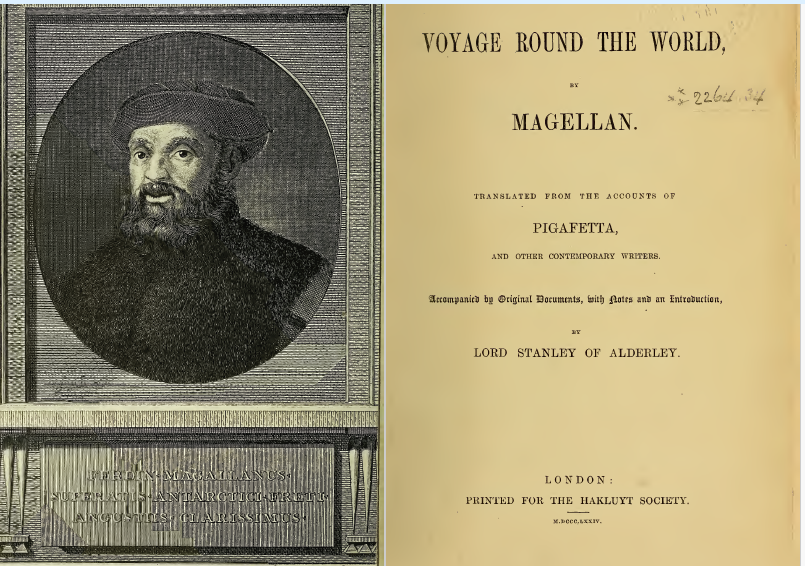
What was historically documented was that after the mass conversion of the Cebuanos, and the forced burning of their old idols, one supposed valiant and wise man could not do it because he was extremely sick. Magellan insisted that he be baptized immediately so he would be healed. Magellan, with a grand procession, paraded through the town to the man’s abode and baptized him, his two wives and daughter. Pigafetta wrote:
“He gave him a refreshing drink to take, and afterwards sent to his house a mattress, two sheets, a covering of yellow wool, and a cushion, and he continued to send him, until he was quite well, refreshing drinks of almonds, rosewater, rosoglio, and some sweet preserves.“
On the fifth day, the man was cured. He then proceeded to burn his idols.
CEBU’S HERO TURNED INTO A BEASTLY PHANTOM
Lapu Lapu was turned into a “wak wak” or aswang or manananggal! A wakwak “is a vampiric, bird-like creature like yaya in Philippine mythology. It is said to snatch humans at night as prey, similar to the manananggal and the Ekek in rural areas of the Philippines.” (Wikipedia)

Humabon told Magellan that Lapu Lapu, a wakwak, was against the foreigners. It was an ingenious idea: Humabon’s men would kill the foreigners at night, individually or in numbers, and blame it on the mythical creature.
Magellan, who did not believe in phantom monsters, decided to attack this wakwak immediately. He brought with him a few Europeans armed only in spear and swords. But the question is: where and who would they attack? The film didn’t say where and who.
The natives – whoever or wherever they were – were ready for them. Most of the Europeans, including Magellan, and a whole lot of natives died, .
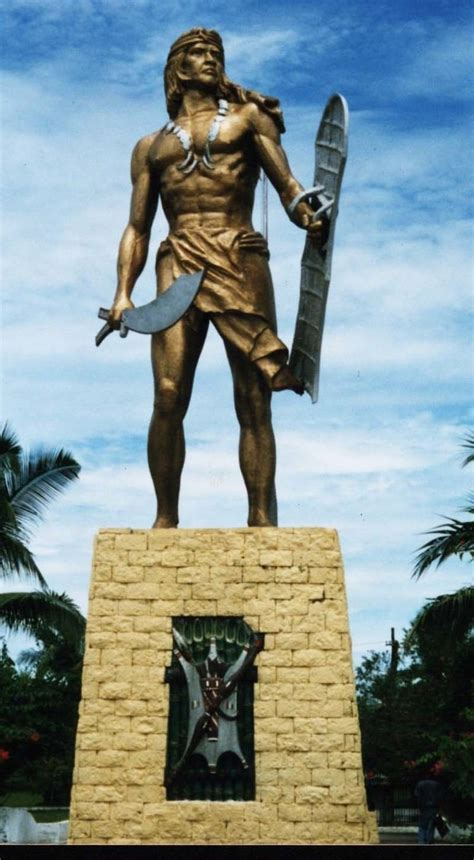
LAV DIAZ: LAPU LAPU NEVER EXISTED
In an interview, Diaz questioned the existence of Lapu Lapu. “Nobody saw him, nobody knows what he looks like,” he said. Obviously, he has not read Pigafetta’s eyewitness account of Magellan’s voyage. Does he know how they all looked like — Rajah Humabon, his wife, the other rajahs and datus who met Magellan’s group? And was Zula, the other chief of Mactan, the rival of LapuLapu also non-existent? The Europeans had not seen him either. But he caused the Battle of Mactan. Or, was the battle of Mactan just a figment of the imagination of Antonio Pigafetta?
In one fell swoop, the ancestors of the Cebuanos were turned into a barbaric cult, far from any civilization, clad in nothing except for tattoos. But their leaders and some of the people were inexplicably fully attired, including simple jewelry and headdresses.
And the great Lapu Lapu, One of Asia’s first fighters for freedom against European colonization, and the Philippines’ first hero, was turned into a myth, a beastly phantom.
A GLOBE-TROTTING SLAVE FROM CEBU?
And one of the agenda of Lav Diaz was some Filipinos’ insistence that Magellan’s slave, Enrique, was a Cebuano. They base that assumption on the indications that Enrique translated for Magellan.
For Lav Diaz and many Filipinos, Rajah Humabon, although he was a Rajah, a Sanskrit word for King, was just a chief of a Stone Age village. So, anybody who spoke their language must be from the place. Hence, Enrique must have been from Cebu.
They of course forgot that the Visayas, from its very name, must be part of the Sri Vijaya Empire, and later, the Majapahit Empire and the Muslim Malay Empire. All Philippine history books taught that.
From the Laguna Copperplate dated 900 AD, the inscription in it provides crucial evidence of a complex, pre-colonial Philippine civilization and its connections with other Southeast Asian regions, such as Indonesia and Malaysia, challenging previous notions of the islands’ isolation before Spanish arrival. It was also written in Old Malay, with some Sanskrit terms and written in Jawi.
All historical documents proved that in the 16th century, the lingua franca in Southeast Asian royal courts was Malay. The letter of the Sultans of Maguindanao and Sulu and Rajah of Buayan during those times were written in Malay. And most importantly, the dominant ethnic groups in Luzon, Visayas, and Mindanao were Malay.
Therefore, a Malay, like Enrique, could speak Malay with Rajah Humabon. He did not have to speak Cebuano.
If Enrique were from Cebu, and was taught the Cebuano language presumably by his parent or parents, then he must have an inkling of what place or what community his family came from. He could then have asked around in Cebu about his relations.
Magellan himself referred to Enrique as a native of Malacca. Magellan bought him when he (Magellan) was in Malacca. Pigafetta, the chronicler, stated that Enrique was originally from Sumatra, Indonesia.
In the film, Enrique said he was sold as a slave many times, from a Chinese to an Arab to a Malay, etc. But if Cebu was a Stone Age village far from civilization, as pictured in the movie, how did Enrique end up in Malacca?
FIRST CIRCUMNAVIGATOR OF THE WORLD
Many Filipino academics are obsessed that Enrique, a slave, be acknowledged as Cebuano and be known as one of the first people to circumnavigate the globe. And if he did return to Malacca, he would be the first person to circumnavigate the globe and returned to his point of origin.
Even in history, the Filipinos want to be famous as a world-traveling Domestic Helper or OFW (Overseas Foreign Worker)! But there’s a problem there. There is no evidence whatsoever that Enrique was able to go back to Malacca, thus circumnavigating the globe. His last known location was Cebu, which was still far from Malacca. He was 2500 km short of circumnavigating the globe! And if he did go back to Malacca, then that would be proof positive that he was not from Cebu.

Why would a slave like Enrique make the Cebuanos proud? According to Antonio Pigafetta, 18 Europeans returned to Spain, thus circumnavigating the globe aboard the ship Victoria. Three Moluccans accompanied the 18 Europeans but they only traveled halfway around the globe. King Carlos I, awarded Victoria’s last captain Juan Sebastián Elcano a coat of arms bearing a globe and the Latin motto Primus circumdedisti me (You were the first to circumnavigate me).
According to some historians, Arabs had been circumnavigating the globe much earlier than Magellan.
FILIPINO SELF-BASHING
The Filipinos are known for self-deprecating, esp. in the presence of foreigners. This film is a great example of that. Portraying 16th century inhabitants of Cebu as naked savages with barbaric practices is a bit over-the-top. It exceeded the normal bounds of Filipino Self-Bashing. It shows the Filipino director’s great admiration for European colonizers and total disdain for his own roots.
Wouldn’t the Cebuanos be prouder of being descendants of Datu or Sri LapuLapu and Rajah Humabon, freedom fighters and conquerors of Spanish and Portuguese conquistadors?!! Humabon should not be known as the first Philippine native king to be converted to Christianity. He should be celebrated as the first native king (Rajah) to massacre a whole group of Spanish/Portuguese conquistadors!!! But this event has been CENSORED in Philippine textbooks and media for 500 years!!!
APPROVED BY EUROPEANS
Anyway, the Europeans loved Diaz’s film. It contained the necessary ingredients for European approval. First it shows Culture, ethnic culture — the more primitive the better, the more barbaric the better. (This gives Europeans a sense of superiority) Second, it contains nudity. Always a plus factor for Europeans. Third, artsy-fartsy techniques like slow pace, tableau photography, montage editing, minimal props (really, because of lack of budget), etc. Fourth, a dose of violence. Fifth, period films are much appreciated, too. Sixth, poverty. Europeans seem to like seeing poverty in other nations. In this film, the Cebuanos were dirt-poor, contrary to the accounts of the eyewitness, Antonio Pigafetta.
Pigafetta described the time when they sold merchandise to the people of Cebu:
“The following Friday we showed them a shop full of our merchandise, which was of various strange sorts, at which they were surprised. For metal, iron, and other big goods they gave us gold, and for the other small and sundry goods they gave us rice, pigs, goats, and other provisions. They gave us ten weights of gold for fourteen pounds of iron; each weight is a ducat and a half. The captain-general would not allow a large quantity of gold to be taken, so that the sailors should not sell what belonged to them too cheap from thirst for gold_, and lest by that means he might be constrained to do likewise with his merchandise^ for he wished to sell it better.”
From Pigafetta’s account, the Cebuanos appeared to be adept at trade. In fact, he mentioned that they were told that a ship from Siam (Thailand), “laden with gold and slaves” had just visited Cebu and paid tributes to the Rajah. In fact, a merchant of that Siamese ship was still there to trade with gold and slaves. This shows that Cebu and the surrounding places were aware and probably practiced slave-trading. In fact, pre-Spanish Visayans, Tagalogs and most of the ethnic groups in the Philippine Islands practiced slavery. In the Visayas, slaves were called ulipon; among the Tagalogs, slaves were called alipin.
The Cebuanos also asked tribute from Magellan, but Magellan refused to give. Although he exchanged gifts with Rajah Humabon later.
Pigafetta described the island of Cebu as:
In this island of Zubu there are dogs and cats, and other animals, whose flesh is eaten ; there is also rice, millet, panicum, and maize; there are also figs, oranges, lemons. sugar-canes, cocos, gourds, ginger, honey, and other such things ; they also make palm-wine of many qualities. Gold is abundant. The island is large, and has a good port with two entrances : one to the west, and the other to the east north-east. It is in ten degrees north latitude and 154 east longitude from the line of demarcation. In this island there are several towns, each of which has its principal men or chiefs.”
Pigafetta also observed a significant amount of gold jewelry and artifacts worn by the local rulers in Cebu and nearby Masawa and Calagan, which piqued Magellan’s interest during their visit. This encounter highlighted the wealth and culture of the region at that time.
CONCLUSION
For me, artistically, it’s a sophomoric film. A nice effort from beginning filmmakers. Historically, it’s an idiotic film. It’s more of a fantasy than an historical film. As a Filipino, it’s a disgusting film that should be criticized and banned. It created a horrible picture of the 16th century natives of the Islands — barbaric, untouched by civilization, pure savages.
The story of Humabon and Lapu-Lapu has not been truly presented in history books. But it is a wonderful story of Fight for Freedom, Malay dignity and pride. Both Humabon and Lapu Lapu and all Visayans were Malays, except for a scattering of Indonesians and Negritos. Because of what Sri LapuLapu and Humabon and their people did; the Spaniards did not return to the Visayas and the nearby big islands of Luzon and Mindanao for 50 years.
For decades now, I have been dreaming of making an international film on Magellan and the Visayans. Too bad I do not have the financiers of Lav Diaz. 
BTW, Gael Garcia Bernal gave a very good performance. I was surprised that he took the role seriously. 

 Postprandial Musings, 2.0